

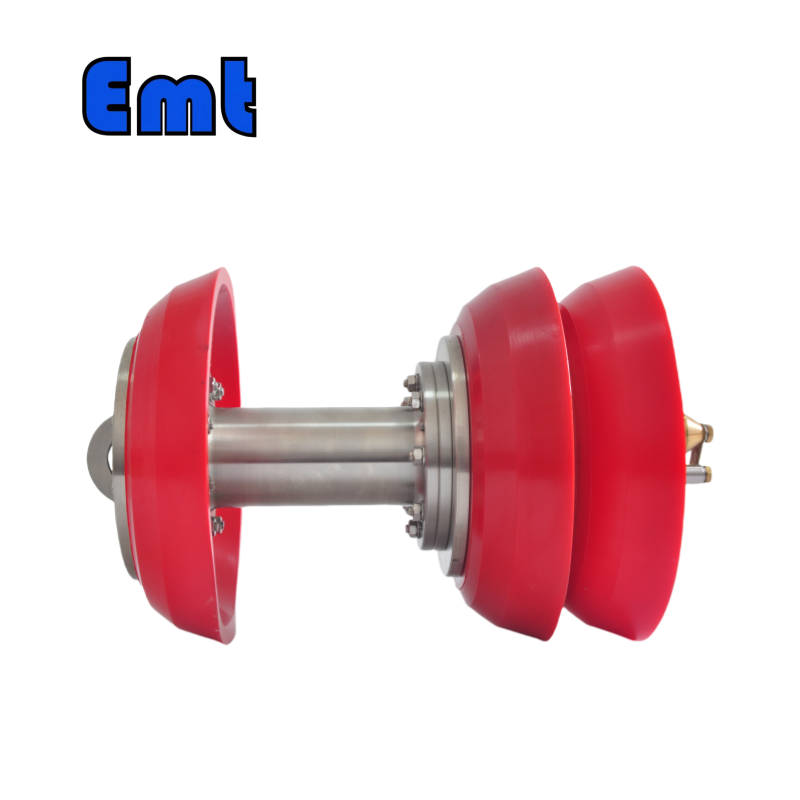


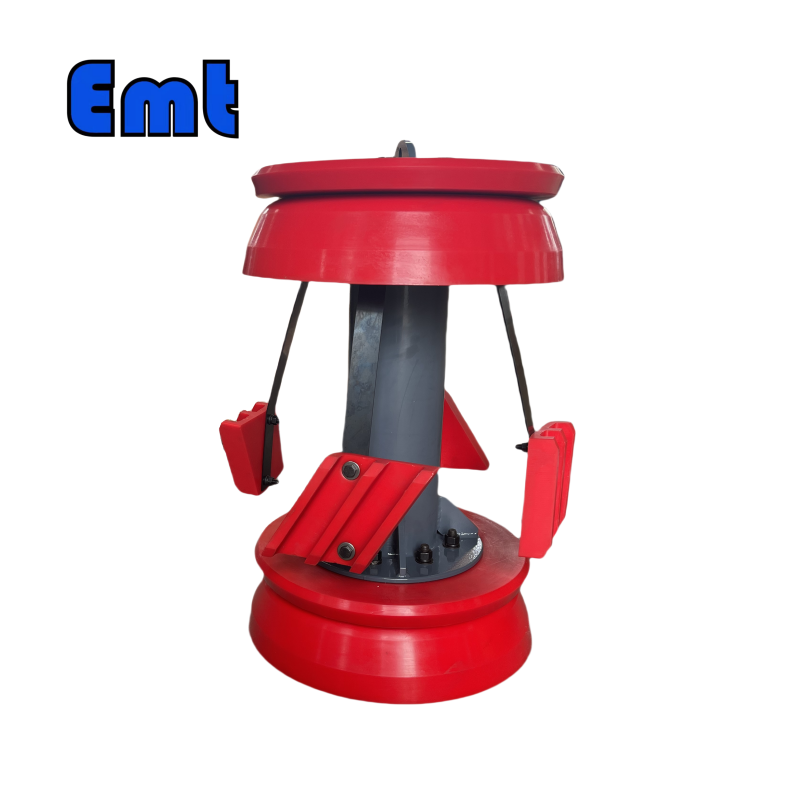
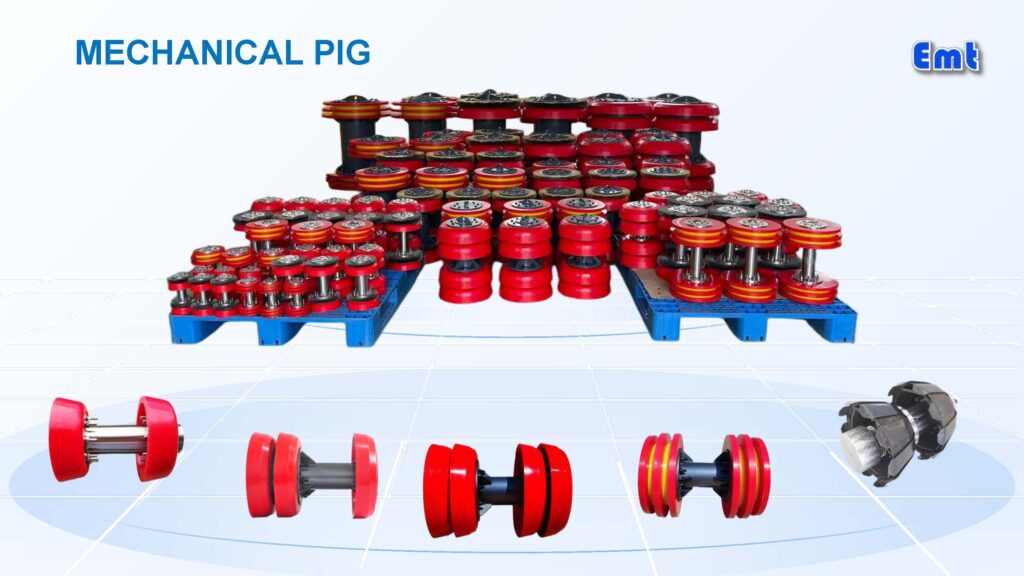
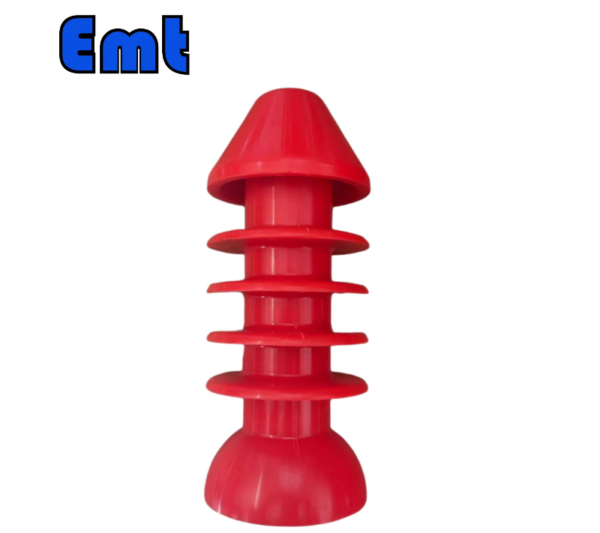
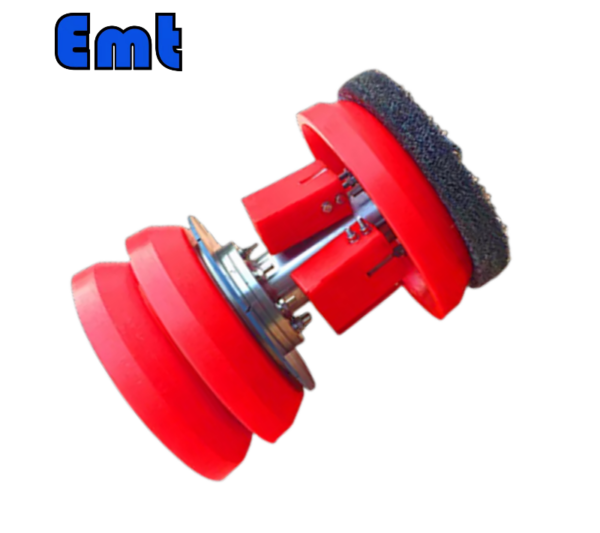
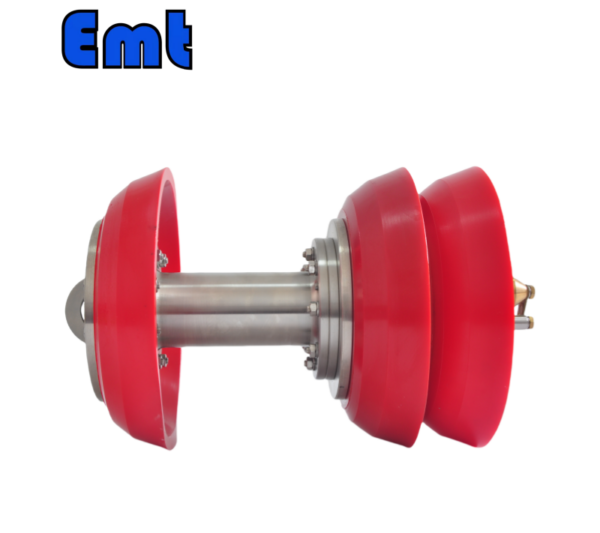
A steel body pipeline pig is a rigid, reusable cleaning tool with a metal skeleton and replaceable polyurethane cups, discs and brushes. EMT offers carbon, stainless and ABS frames for oil, gas and water lines.
Introduction
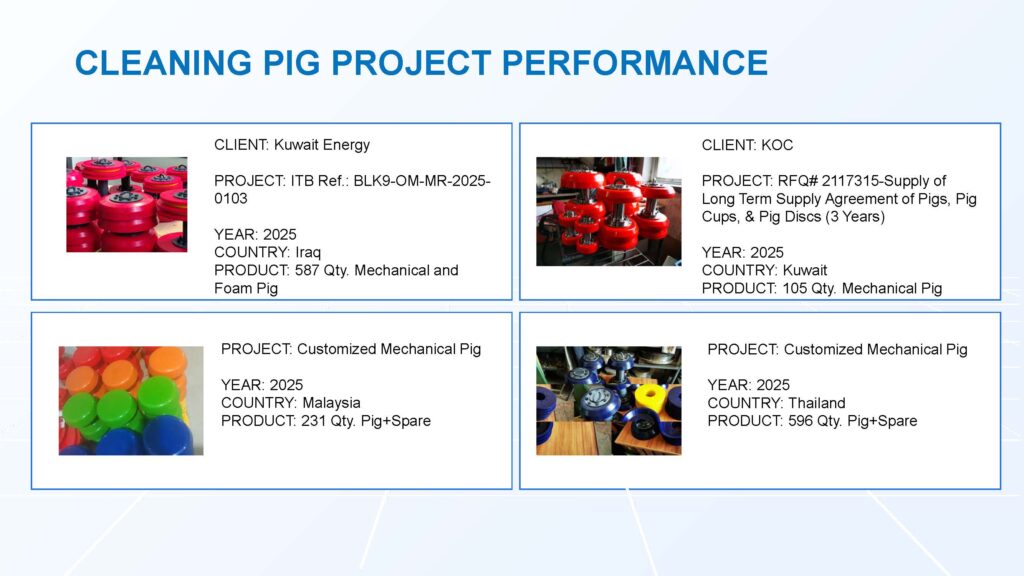
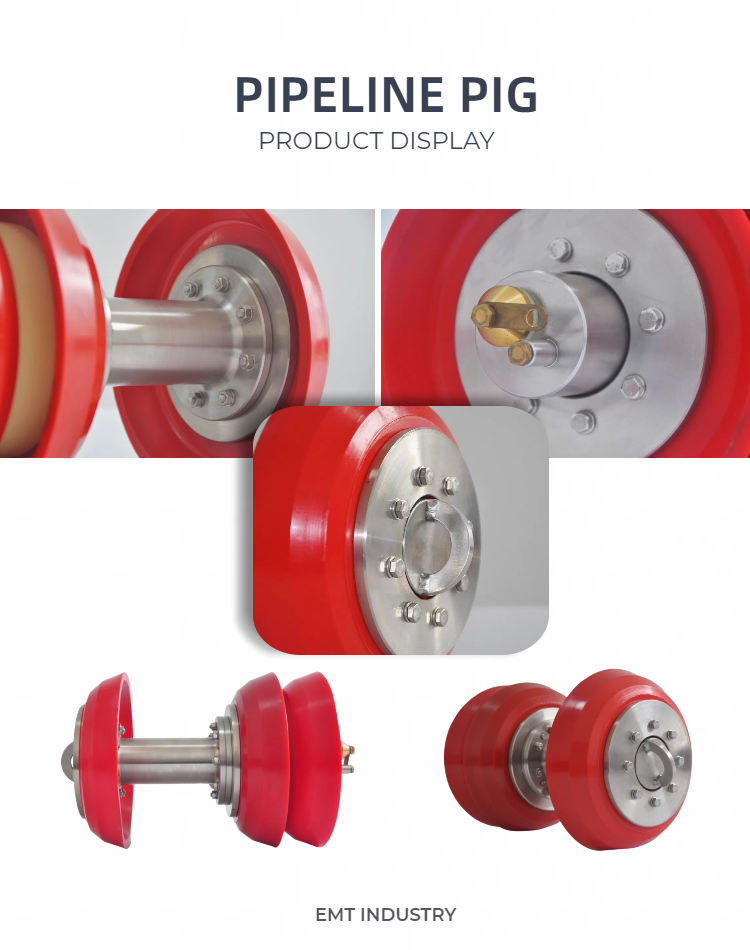
A steel body pipeline pig is the workhorse of mechanical cleaning. Unlike foam tools, it carries a metal skeleton that holds its shape under pressure and resists the abrasive loads found in dirty trunk lines. EMT assembles each tool from a frame, sealing cups or discs, and a brush set sized to the job. You can swap worn parts on site, which keeps the cost per run low over the life of the asset.
How It Works
The tool rides ahead of the product flow and builds a pressure difference between its front and rear. The cup or disc interference, usually 3 to 5 percent and up to 10 percent on demand, creates the seal that drives the pig forward. A starting pressure of 0.2 to 0.3 MPa is typical, and running speed reaches 3, 5 or 15 m/s depending on line conditions. The rigid frame keeps the seals centred so the tool tracks the pipe wall.
Materials And Build
EMT offers three skeleton materials. Carbon steel is the default and the lowest cost. Stainless 304 or 316L suits corrosive or sour service. ABS is available for lines at or below DN200 where weight and spark risk matter. Cups use rubber, polyurethane or fluoro-rubber; discs and spacing rings use polyurethane as standard. Polyurethane hardness defaults to Shore 85A with 82A and 87A on request.
Common Accessories
You can fit a gauging disc in aluminium to check for pipe deformation, wire brushes in carbon steel, stainless or nylon to cut rust and wax, and a spring brush for heavier deposits. A neodymium magnet picks up trapped rust, and a polyurethane guide plate at the nose helps the tool enter and extends wear life. A brace pad at the front stops impact sparks at the launcher closure on gas lines.
Typical Applications
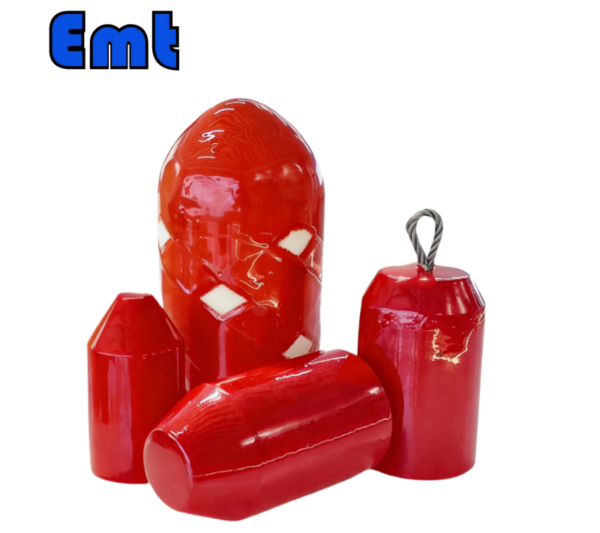
Operators use this tool for pre-commissioning debris removal, regular wax and scale scraping, and as the first pass before an inspection pig. It suits lines with bends, though EMT advises against it where the pipe is badly deformed or the bend radius is below 1.5D. For a first look at an unknown line, a foam pig is the safer exploration tool before committing a rigid one.
Key Features
- Rigid skeleton – Holds shape under pressure and survives abrasive, dirty lines.
- Replaceable seals – Swap cups, discs and brushes on site instead of the whole tool.
- Material choice – Carbon, 304/316L stainless or ABS to match the service.
- Field accessories – Gauging disc, brushes, magnet and guide plate as needed.
- Up to 10 percent interference – Tunes the seal for worn or oversized pipe.
- Speed range – Runs at 3, 5 or 15 m/s to match line throughput.
Specifications
| Attribute | Value |
| Skeleton material | Carbon steel (default), 304/316L SS, ABS (DN<=200) |
| Seal material | PU (Shore 85A std, 82A/87A opt), rubber, FKM |
| Interference | 3-5 percent, up to 10 percent on request |
| Start pressure | 0.2-0.3 MPa |
| Running speed | 3 / 5 / 15 m/s |
| Bend radius | >=1.5D (>=2.5D below DN100) |
| Standards | Made to EMT drawing and client line data |
FAQ
When should I choose a steel body pipeline pig over foam?
Pick the rigid tool when the line is dirty, the run is long, or you need repeatable scraping. Foam suits first exploration and drying. The steel frame lasts far longer under abrasive load.
Can I replace the cups without a new tool?
Yes. EMT designs cups, discs and brushes as field-replaceable consumables, which is the main reason operators prefer a steel skeleton over a one-piece polyurethane pig.
What material do you recommend for a sour gas line?
Use 316L stainless for the skeleton and fluoro-rubber seals. Tell EMT the media, temperature and pressure so the build matches the service.
Reviews
There are no reviews yet.