

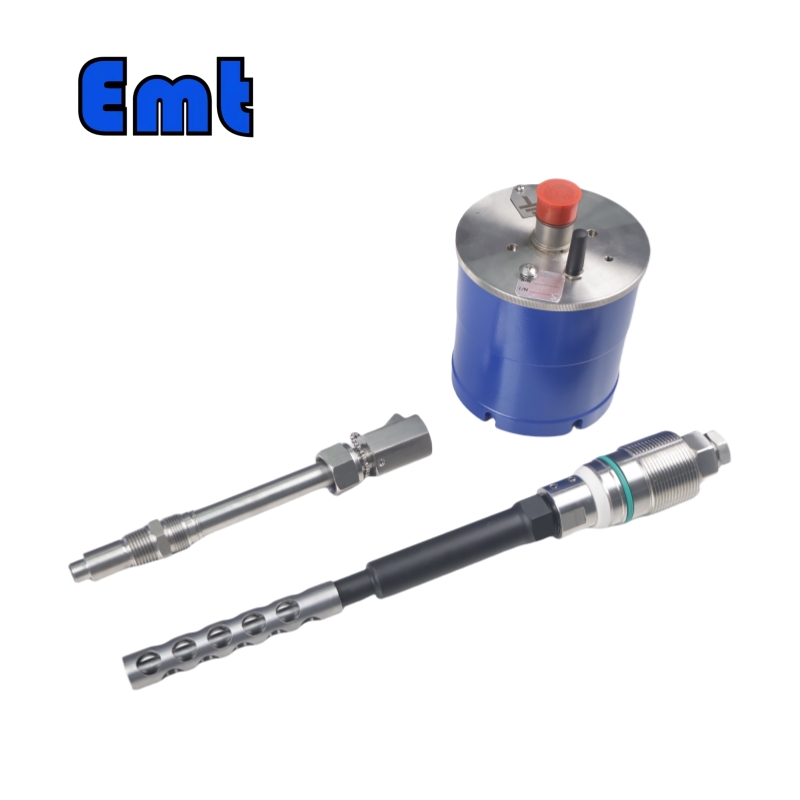
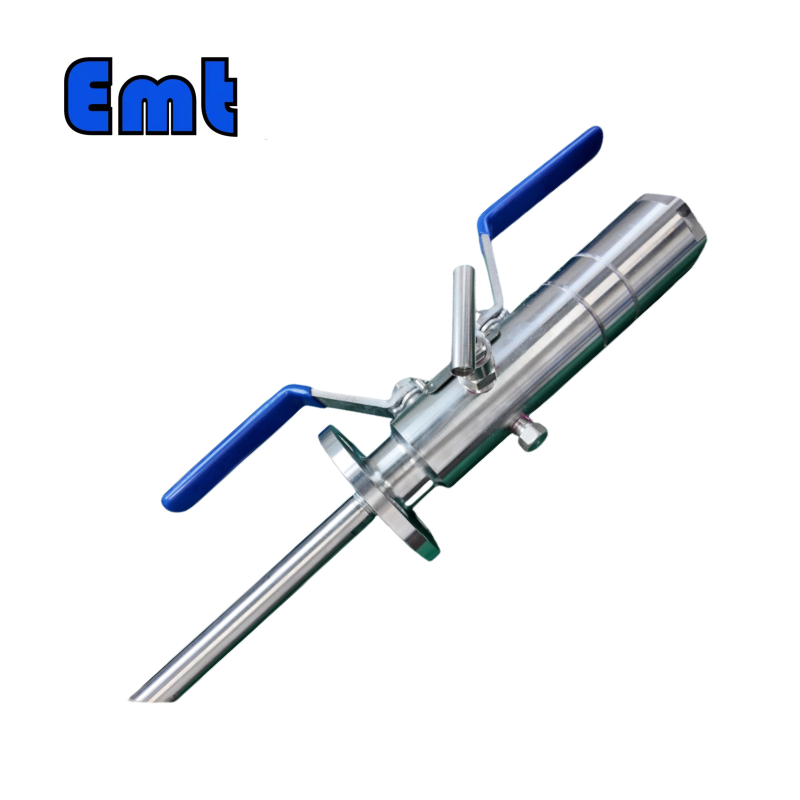
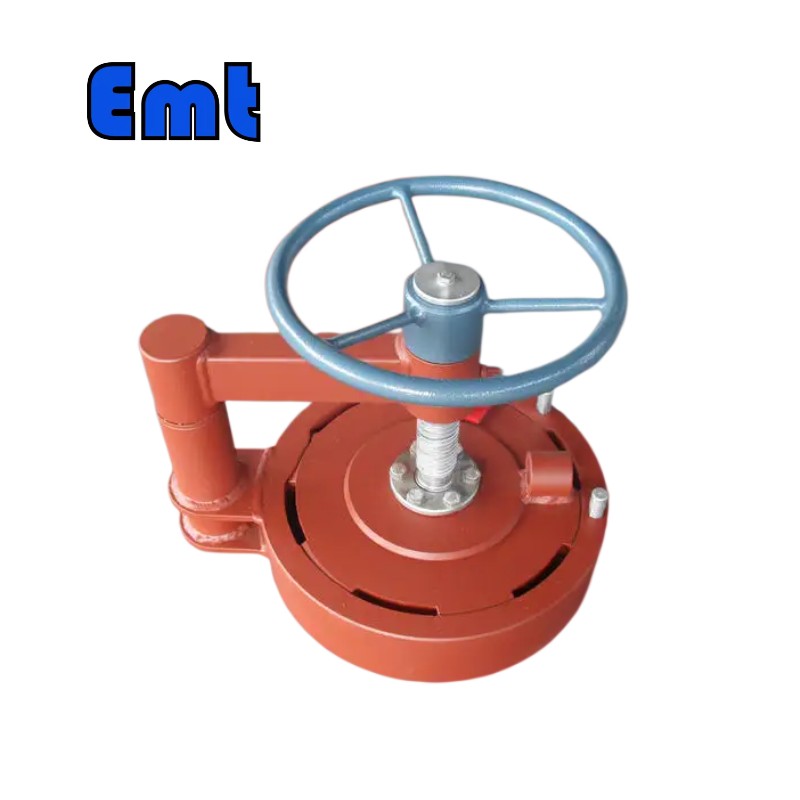
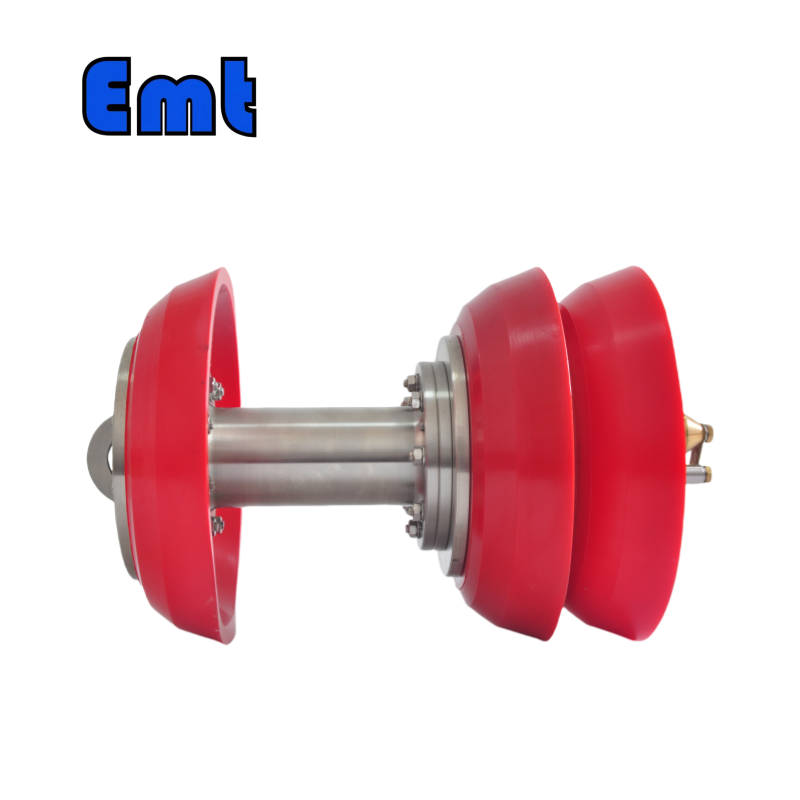
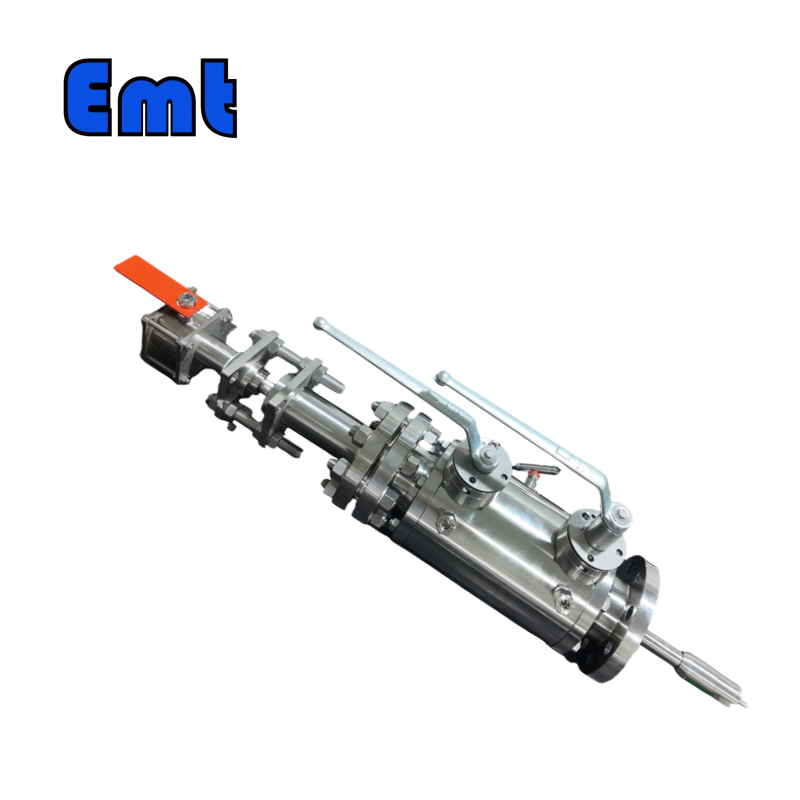
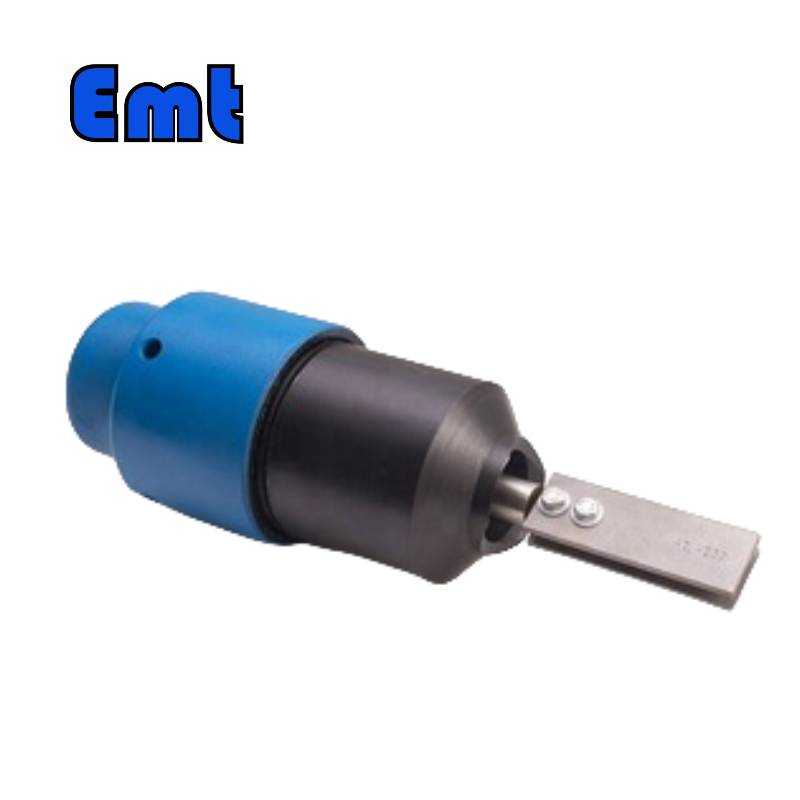


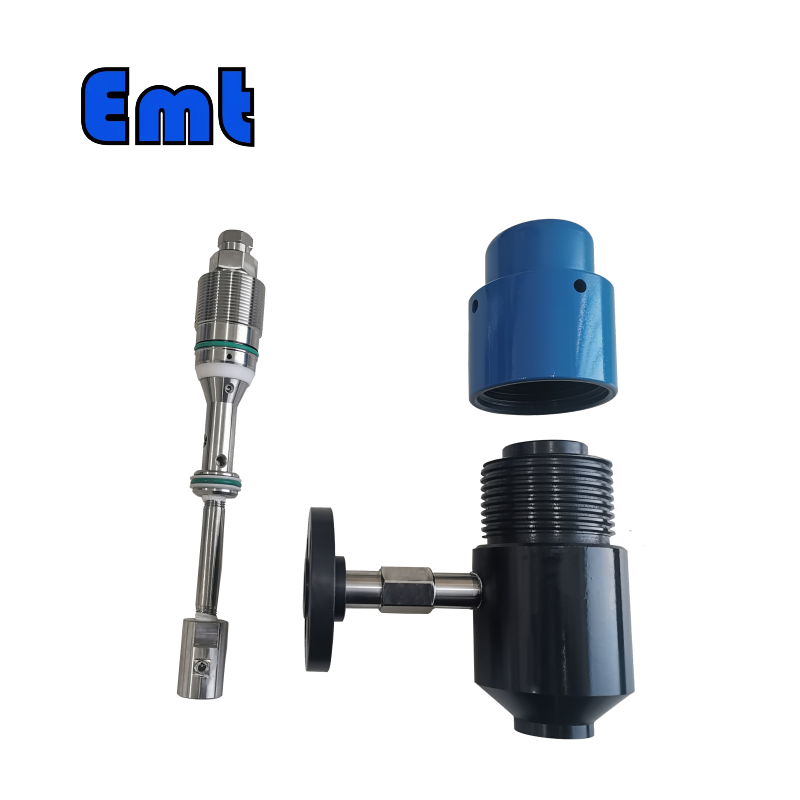
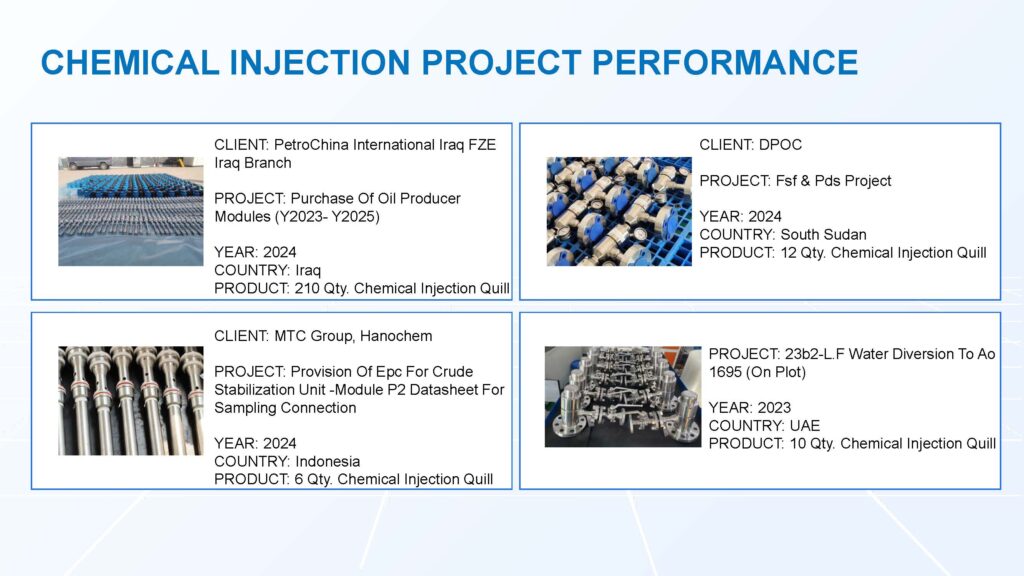
An injection quill carries a chemical from the injection supply into the process stream and places it in the turbulent core of the flow, where it disperses. If the chemical discharges at the pipe wall instead, it pools, reacts with the wall before it mixes, and delivers an inconsistent dose that wastes chemical and accelerates corrosion rather than preventing it. EMT supplies quills in fixed and retractable configurations, with tube sizes from 1/4 inch to 1 inch, pressure classes from 150LB to 1500LB, and 316L stainless steel on all internal wetted parts.
Why An Injection Quill Is Not Just A Tube
The whole reason a quill exists is placement. A chemical injected directly at the pipe wall runs along it, concentrating in the low-velocity zone where the flow cannot carry it away. It reacts with the pipe wall before it disperses, and the dosing that results is uneven across the pipe cross-section. The corrosive chemical ends up exactly where it does the most damage.
A quill extends the injection point out into the moving stream, typically to the centre of the bore or between one third and one half of the internal diameter, so that process velocity and turbulence do the dispersing. The chemical is introduced into a well-mixed section rather than a stagnant one.
Beyond placement, a quill has to survive the service. Early quills were simple tubes extending into the pipe, and they were vulnerable to erosion corrosion and cavitation at the tip. Vortex shedding and related flow problems made tip damage common, and it was frequently the quill and the piping immediately downstream that failed. A modern quill is a precision mechanical device designed to manage those effects, and the tip configuration and the material are selected to match the chemical and the flow.
Fixed And Retractable: The Two Configurations
Injection quills exist in two mechanical configurations, and the choice decides the maintenance strategy for the life of the line. It has to be made at design stage, because converting a fixed quill to a retractable one means new pipe connections.
| Factor | Fixed quill | Retractable quill |
|---|---|---|
| Maintenance access | Requires shutdown and depressurisation | Available during operation |
| Purchase cost | Lower | Three to eight times higher |
| Installation complexity | Lower | Higher, needs a full-bore valve |
| Leak path count | Lower, fewer dynamic seals | Higher, packing gland adds a seal |
| Inspection frequency | Low | Higher, packing wear at the gland |
| Suited to fouling chemicals | Lower, the tip fouls in place | Higher, the tip can be cleaned often |
| Operator skill demand | Standard | Higher for insertion and withdrawal |
Fixed Injection Quills
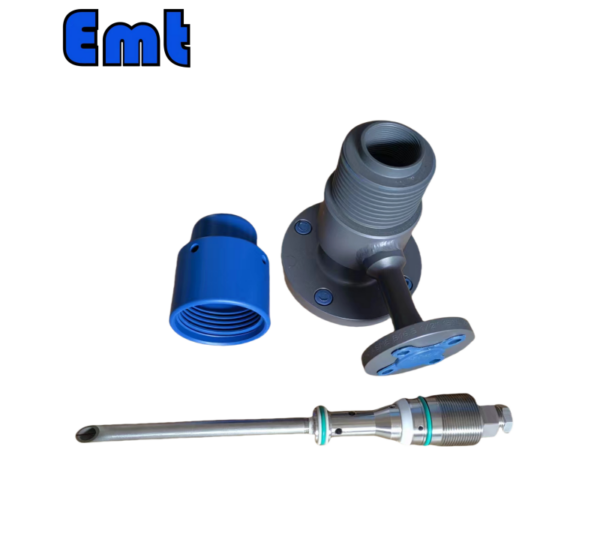
A fixed quill mounts through a threaded, flanged or welded connection and the body stays inside the pipe during operation. Removing it requires depressurising and draining the line. The construction is simple, which means fewer parts, fewer leak paths and a lower purchase price. EMT supplies fixed quills with a self-energizing seal, where process pressure assists the sealing force, a forged steel ASME-rated body, and an insertion tube in an alloy matched to the chemical being injected.
Fixed quills suit lines that have planned shutdowns, clean chemicals that produce no deposit at the tip, and lower pressure service where the maintenance risk is manageable. Municipal water treatment plants use them widely for exactly these reasons.
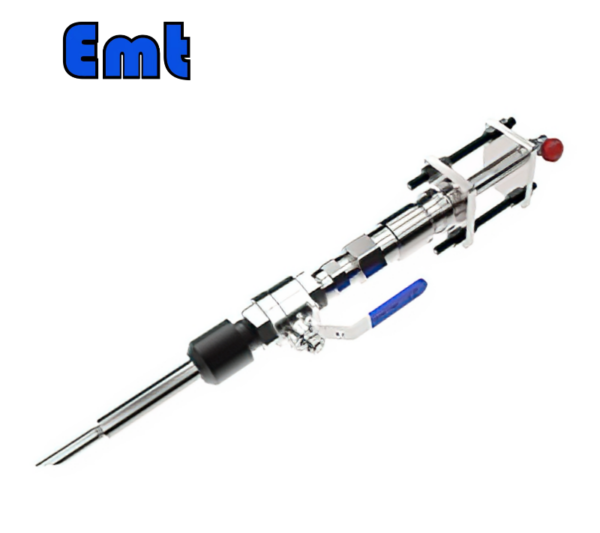
Retractable Injection Quills
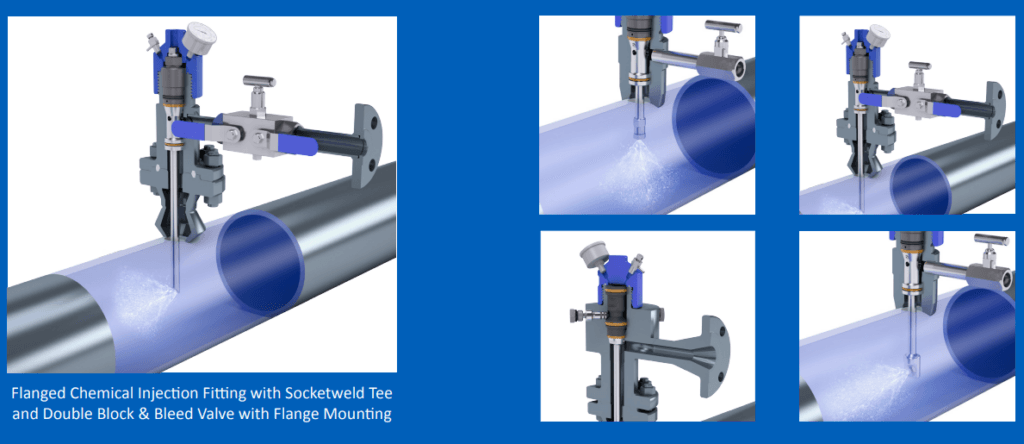
A retractable quill mounts through a full-bore isolation valve. The quill withdraws behind the valve seat, the operator closes the isolation valve, and the assembly is then separated from the live process completely. The components that matter are the insertion tube, the packing gland that seals against process pressure during movement, the full-bore isolation valve, the safety interlock that prevents ejection under line pressure, and the guide housing that supports the tube against flow forces.
The safety interlock is not a convenience feature. Process pressure acts on the tube cross-section and pushes it outward during retraction, so an unrestrained tube becomes a projectile. A 12 mm tube in a 100 bar line develops roughly 1,130 N of ejection force. The interlock is what prevents that, and it must be confirmed engaged before the packing gland is loosened.
Retractable quills are the right choice where the line runs continuously with no shutdown window, where the chemical fouls or crystallises at the tip within weeks, where solids erode the tip quickly, or where the cost of downtime exceeds the cost of the equipment. Refineries and offshore installations meet these conditions as a matter of routine.
Injection Quill Specifications
| Parameter | Specification |
|---|---|
| Model series | EMT-CI Series |
| Access fitting connection | 2-inch Weldolet (Flareweld), 2-inch ANSI flange (RF or RJ) |
| Body material options | Carbon steel (standard), 316 stainless steel, 316L stainless steel, duplex stainless steel |
| Internal wetted material | All internal wetted parts 316L stainless steel |
| Operating temperature | -20 to 200 degrees C (-4 F to 392 F) |
| Pressure rating | 150LB, 300LB, 600LB, 900LB, 1500LB, up to 6000 PSI |
| Quill tube sizes | 1/4 inch, 1/2 inch, 3/4 inch, 1 inch |
| Seal material | Fluororubber or PTFE |
| Nozzle types | Open-end flat cut, 45-degree angled cut, spray head atomizing |
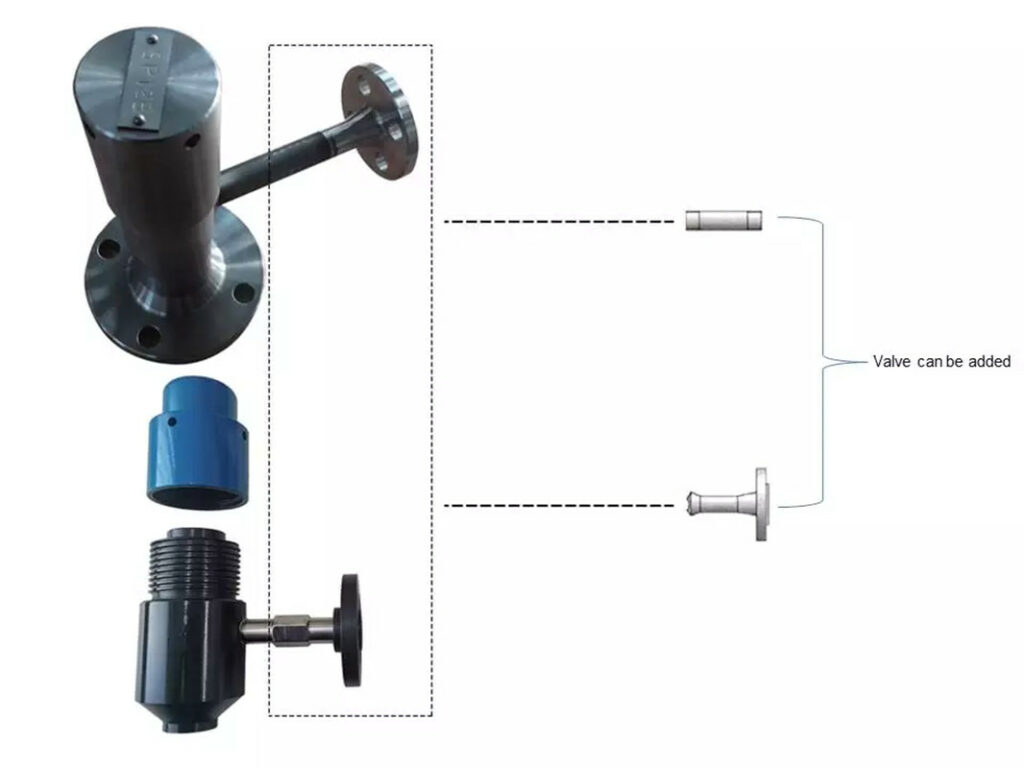
| Nipple and valve size | 1/4 inch, 1/2 inch, 3/4 inch, 1 inch |
| Connection | Flanged or threaded base, per pipeline interface |
Nozzle Selection And Material Compatibility
The nozzle is not a cosmetic detail. A standard open-ended quill delivers the chemical as a single stream and relies on pipeline turbulence to disperse it. In a large diameter or low velocity service, that produces poor mixing and inconsistent distribution across the pipe cross-section. A spray nozzle breaks the stream into fine droplets, greatly increasing the contact area and giving uniform dispersion even at large bore or low flow. In those conditions, the spray head is the correct choice.
Wetted material has to be matched to the injected medium. EMT uses 316L stainless steel on all internal wetted parts as standard, with the insertion tube in an alloy selected for the chemical. Kynar, Hastelloy C-276 and PVC are among the options used where the injected chemical requires them. Fluororubber and PTFE are available for the seals.
Nozzle orientation matters too. The tip can discharge with the flow, across the stream, or at an angle, and the choice depends on the chemical, the pipe geometry and the mixing objective. Cross-stream injection can improve initial dispersion in some liquid applications, while an incorrectly directed discharge increases tip wear and can create unstable backpressure.
How To Specify An Injection Quill
- Start with the process conditions, not a standard drawing. Normal and maximum line pressure and temperature, the process fluid, the chemical and its concentration, the injection rate, the pipe material and schedule, and the available connection type all come first.
- Decide fixed or retractable. If there is no shutdown window, or the chemical fouls the tip quickly, specify retractable. If shutdowns are planned and the chemical is clean, fixed is simpler and cheaper.
- Set the feed pressure margin. The chemical supply system has to overcome the line pressure plus the losses across tubing, fittings, the check valve, the quill passage and any downstream restriction. A marginal differential produces inconsistent dosing and a check valve that does not seat reliably.
- Select the nozzle and the tube size. Open-end for turbulent service, spray head for large bore or low velocity, and a tube size that will not restrict the required injection rate.
- Match the wetted material and seal to the chemical. This also sets the maintenance interval, because some chemicals need larger passages, higher feed pressure or heat tracing to prevent build-up.
- Confirm the insertion depth and orientation against the flow direction, and provide flushing provision where the chemical can crystallise or polymerise.
Typical Applications
Injection quills serve corrosion inhibitor injection, scale inhibitor dosing, methanol and glycol injection, biocide treatment, and chemical dosing in general, across oil and gas, water treatment, chemical processing and power generation. They are fitted as part of a metering system, with the chemical supply line, the dosing pump and the quill together forming the injection point.
EMT supplies standard fixed quills in flanged, welded and threaded configurations, retractable quills in the EMT-CI series, and the corrosion coupons and corrosion probes that verify whether the injected chemical is doing its job. The monitoring side matters as much as the injection side, because an unverified injection rate is an assumption.
FAQ
What is a chemical injection quill?
A tube that carries an injected chemical from the supply line into the process stream and places it in the turbulent core of the flow rather than at the pipe wall. This is what makes the dosing effective and prevents the chemical from reacting with the wall before it disperses.
What is the difference between a fixed and a retractable injection quill?
A fixed quill stays permanently in the pipe and can only be removed with the line depressurised and drained. A retractable quill withdraws through a full-bore isolation valve without a shutdown, so the tip can be inspected, cleaned or replaced while the line is in service. The choice cannot be reversed later without new pipe connections.
Why does a quill have a safety interlock?
Because process pressure pushes the tube outward during retraction. A 12 mm tube in a 100 bar line generates roughly 1,130 N of ejection force, so an unrestrained tube becomes a projectile. The interlock or retraction stop must be confirmed engaged before the packing gland is loosened.
What nozzle types are available?
Three configurations. Open-end with a flat cut for straightforward service, a 45-degree angled cut, and an atomizing spray head. Then the spray head is the right choice in large diameter or low velocity service where a single stream would not disperse evenly across the bore.
How is the quill tube material chosen?
By the injected chemical. EMT uses 316L stainless steel on all internal wetted parts as standard and selects the insertion tube alloy for the medium. Kynar, Hastelloy C-276 and PVC are used where the chemical requires them, and the seal is fluororubber or PTFE. Viscosity matters too, since a viscous polymer or slurry may need a larger passage, higher feed pressure or heat tracing.
What pressure can an injection quill handle?
EMT offers 150LB, 300LB, 600LB, 900LB and 1500LB classes, which is up to 6000 PSI, with an operating temperature range of -20 to 200 degrees C. So the rating is confirmed against the actual line condition at order stage.
How often does an injection quill need inspection?
That depends on the chemical. A retractable quill can be inspected on a planned cycle without shutting the line, which is one of the main reasons to specify it. A fixed quill needs a shutdown, so inspection frequency is usually driven by the plant shutdown schedule rather than by the equipment.
Related EMT products
Related items in the same injection package include the retractable injection quill in the EMT-CI series, the flange connection injection quill and welded connection injection quill for the fixed designs, and the corrosion coupons and corrosion probes used to verify the injection result. EMT supplies these so the complete corrosion control loop is documented under one order.
Reviews
There are no reviews yet.