

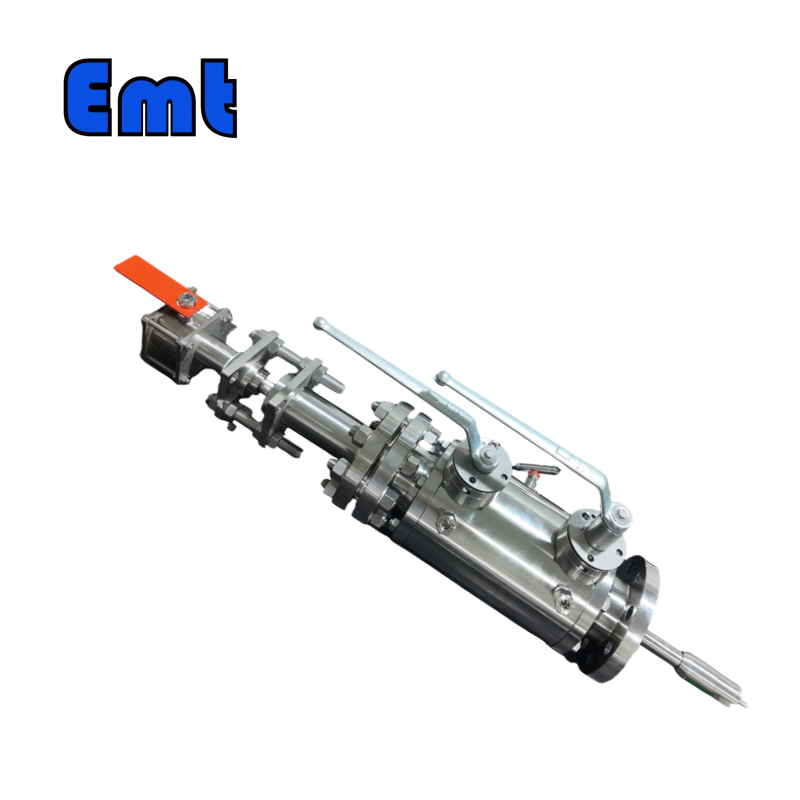
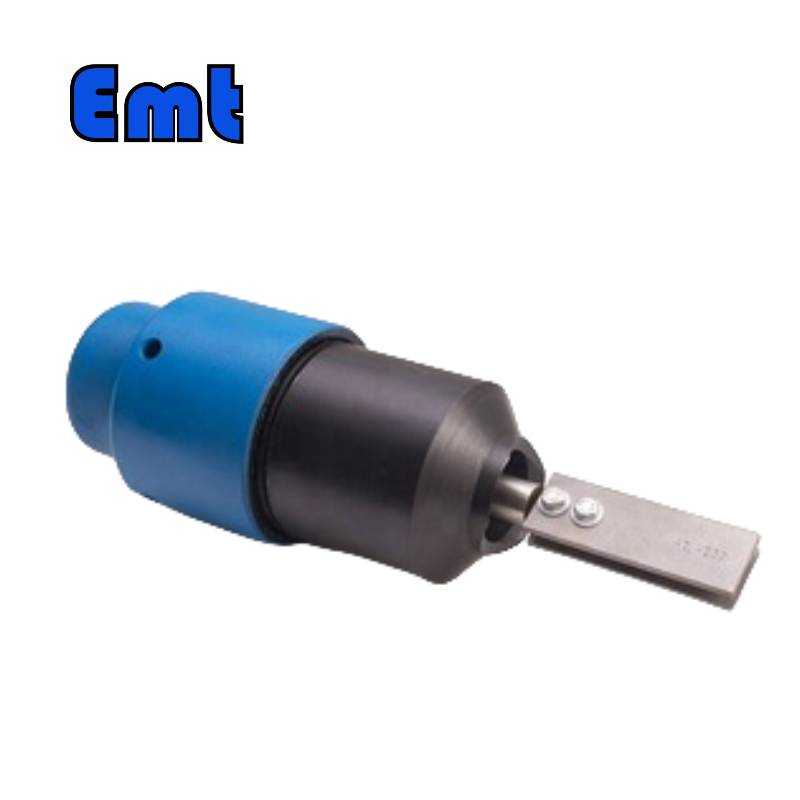


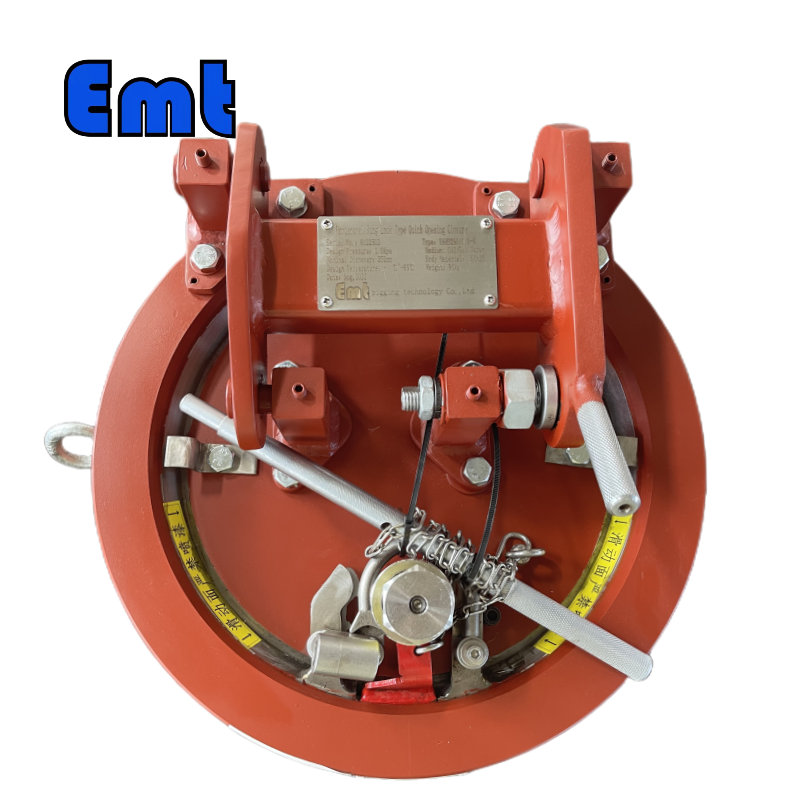
There are three quick opening closure types, and they differ in how they lock and how much force they need. Bayonet is a twist-and-lock for DN100-DN350 and frequent access. Clamp is a hinged segmented ring that gives even pressure distribution for high-pressure service. Lock ring uses a spring-loaded band that expands into a groove, needs the least operating force and suits DN400-DN1200. All three seal to 40 MPa and -50 to 300 degrees C, and all three include a safety screw and relief groove so a trap cannot be opened under pressure.
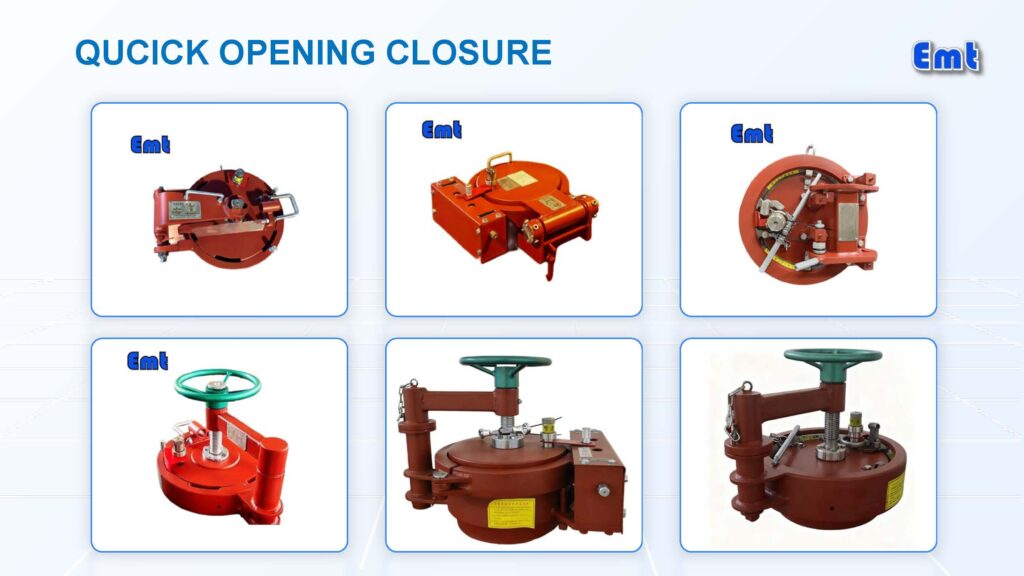
Quick Opening Closure Types Compared
A quick opening closure is the access door on the end of a pig launcher or receiver, and it is also used on pressure vessels and filter housings. The whole point of the device is to defeat the fact that a conventional bolted flange needs dozens of bolts undone before anyone can put a hand inside. A QOC opens in minutes with a handle, and it re-seals with a single elastomer seal in a groove.
The difference between the three types is the locking mechanism, and that single difference cascades into size range, operating effort, and the service conditions each one suits.
Bayonet Type Closure
The bayonet closure locks by a twist-and-lock action. Tabs engage slots in the closure ring and a rotation pulls the cover tight against the sealing face. The operating effort is the lowest of the three and there is no relative rotation of the sealing ring during locking, so the seal face is not damaged by the locking action itself.
Bayonet units are the standard choice for DN100 to DN350 pipelines and are used where the trap is opened and closed frequently. EMT supplies them in both horizontal and vertical configurations, and the horizontal version installs truly level with only 0 to 5 mm of saddle offset, which matters when the closure has to stay flush with a vessel or an inline fitting.
The bayonet type also carries secondary pressure relief. Combined with the safety screw and the relief groove, it means the residual pressure in the chamber is vented before the cover is allowed to move.
Clamp Type Closure
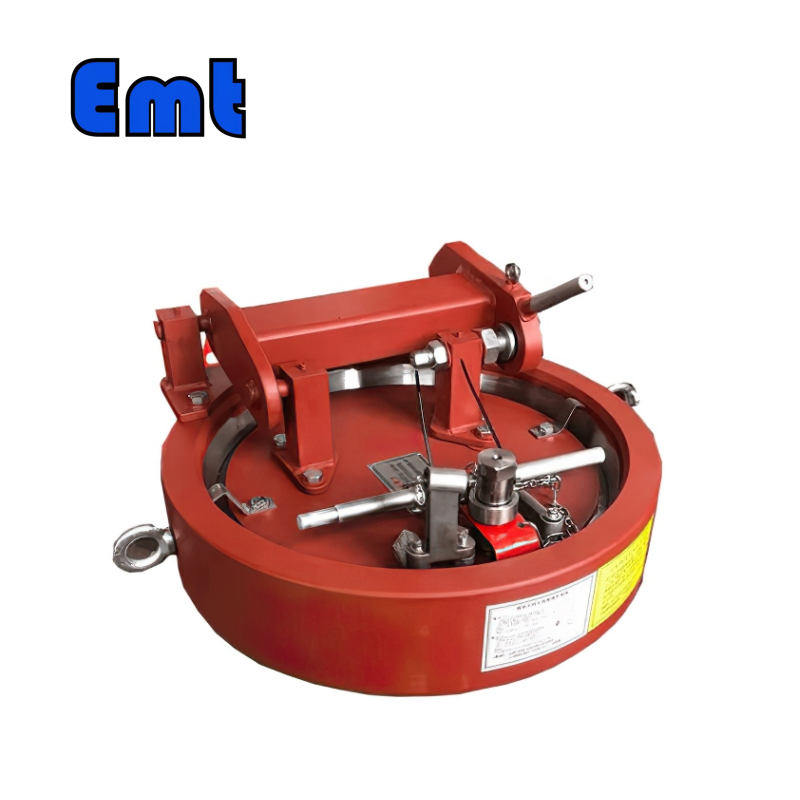
The clamp closure uses a segmented ring in a hinged or bolted arrangement that pulls the cover evenly onto the sealing face. Even pressure distribution across the sealing surface is the technical point of this design, and it is why clamp closures are specified for high-pressure service and harsh duty, including high-pressure long-distance transmission pipelines.
Clamp units work on horizontal or vertical traps, and the structure is compact for the pressure it carries. Where the operating medium is aggressive, or the pressure is high and the seal face is large, the clamp design distributes the load in a way that a single lock ring does not.
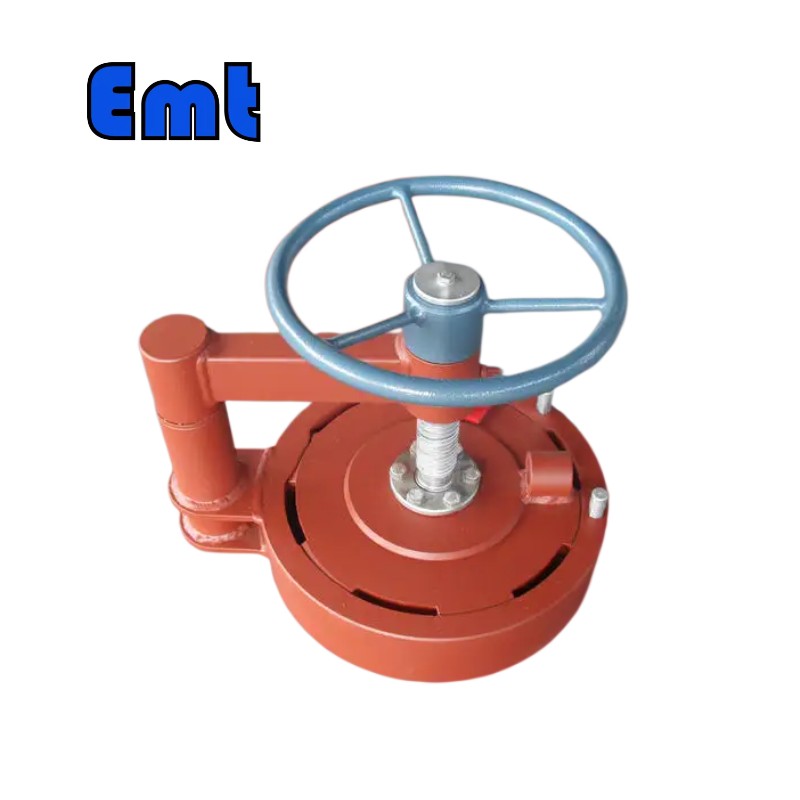
Lock Ring Type Closure
The lock ring closure, also called a bandlock, uses a spring-loaded band that expands into a groove on the barrel flange. Because the band expands rather than rotating against the seal face, it requires the least operating force, and one person can open it. The mechanical simplicity also means the locking action itself does not degrade the sealing surface.
Lock ring closures are the standard for DN400 to DN1200 lines. On large diameter traps, the operating force difference between closure types becomes the difference between a one-person job and a job needing lifting gear, which is the practical reason large-diameter service defaults to this type. EMT also supplies a bandlock variant with a design pressure range of 1.6 to 30 MPa, a 2 mm corrosion allowance, and 7-degree seismic fortification.
Specification Comparison
| Parameter | Bayonet | Clamp | Lock ring |
|---|---|---|---|
| Locking mechanism | Twist and lock, tabs engage slots | Segmented hinged or bolted ring | Spring-loaded band expands into groove |
| Typical size range | DN100 – DN350 | Medium to large diameter | DN400 – DN1200 |
| Operating effort | Low | Moderate to high | Lowest, single operator |
| Seal face rotation during locking | None | Minimal | None |
| Best suited to | Frequent access, medium and low pressure | High pressure, harsh duty | Large diameter, high pressure and temperature |
| Orientation | Horizontal and vertical | Horizontal and vertical | Horizontal and vertical |
Common Technical Specifications
The quick opening closure types share one specification set, which is what makes it practical to change type without changing the pressure envelope. The table below covers all three.
| Parameter | Specification |
|---|---|
| Nominal diameter | Up to 1800 mm |
| Design pressure | Up to 40 MPa |
| Design temperature | -50 degrees C to 300 degrees C |
| Working medium | Oil, gas, water |
| Pipe wall thickness | 6 mm to 100 mm |
| Materials | 16Mn, A350 LF2, A105, SS304/316, F51/F53/F55 duplex, INCONEL 625, HASTELLOY C |
| Structure types | Bayonet, Clamp, Lock-Ring, horizontal or vertical |
| Standards | ASME B16.5, NACE MR 0175 |
| Seal service interval | 12 months |
How The Safety Interlock Works
Every EMT quick opening closure type uses the same three-part safety arrangement, and it is the reason the device can be operated by one person without a written procedure every time.
First, the safety screw with a relief groove. Before the cover is allowed to move, the safety screw is backed off and the relief groove vents any residual pressure in the closure chamber. This is the physical mechanism that prevents a cover being opened against a trapped pressure.
Second, the single elastomer seal in the groove. One seal line means one leak path instead of a gasket face with multiple possible leak locations, and it is what allows the seal to be renewed on a 12-month service interval with a spare seal kit.
Third, the locking geometry itself. Whether it is the bayonet tabs, the clamp ring or the expanding band, each locks the cover against line pressure rather than relying on operator torque.
Closure Selection Guide
Comparing quick opening closure types comes down to diameter, pressure and access frequency. The following sequence resolves most selections in one pass.
- Check the nominal diameter first. Below DN350, bayonet is normally the default. Above DN400, lock ring is normally the default because of the operating effort.
- Check the pressure and medium. Clamp is the right answer for high-pressure, harsh service where the seal face is large and the load must be distributed evenly.
- Check how often the trap will be opened. Frequent access favours the low-effort types, bayonet and lock ring.
- Check the orientation. Horizontal installations require the closure to sit level, within 0 to 5 mm of saddle offset, so that the pig passes through without interference.
- Check the material against the service. Carbon steel for general service, stainless or duplex for corrosive and sour media, and NACE MR 0175 compliance where H2S and CO2 are present.
- Confirm the pressure rating covers the trap. EMT pig launcher and receiver skids reach a design pressure of 42 MPa with a 2 mm corrosion allowance and 7-degree seismic rating, and the closure must be rated to match.
Typical Applications
Quick opening closure types are specified wherever fast, repeated, tool-free access to a pressurised volume is needed. In pipeline operations that means the end closure of every pig launcher and receiver. The same three types are used on filter housings, pressure vessels, storage tanks and downhole equipment, in oil and gas, petrochemical, water treatment and mining services.
Because the closure is the access point at the trap end, the type is matched to the trap diameter, pressure and layout, which is why EMT designs and manufactures the closures in-house alongside the launchers and receivers. Related EMT products include the quick opening closure range, the bayonet type closure, the lock ring closure and the pig launcher and receiver they are fitted to. That removes the dimensional mismatch and poor sealing problems that come from buying the closure and the trap from different suppliers.
FAQ
What are the three quick opening closure types?
Bayonet, clamp and lock ring. Bayonet uses a twist-and-lock mechanism, clamp uses a segmented ring for even pressure distribution, and lock ring uses a spring-loaded band that expands into a groove. All three are supplied in horizontal and vertical configurations.
Which quick opening closure type is best for a large diameter pipeline?
Lock ring, for DN400 to DN1200 lines. The expanding band needs the least operating force, so a single operator can open it on a large trap. On smaller lines below DN350, bayonet is generally more practical.
Can a quick opening closure be opened while the line is under pressure?
No, and it is designed so that it cannot be. Every EMT closure includes a safety screw with a relief groove. The screw is backed off first to vent residual chamber pressure, and only then can the cover move. This is what makes single-operator operation safe.
What is the difference between a bayonet and a lock ring closure in practice?
The locking action. A bayonet locks by rotating tabs into slots, while a lock ring expands a band into a groove. Neither rotates against the sealing face, so both are kind to the seal. The practical difference is size range and operating effort, with lock ring being the choice on large diameter where the operating force difference decides whether one person or a crew is needed.
How often should the seal be replaced?
The service interval is 12 months. The seal sits in a single groove, which means there is one leak path to renew and the job is quick. EMT supplies spare seal kits for this, and the closure is designed so the seal can be changed without replacing the closure body.
What materials are available for quick opening closures?
16Mn, A350 LF2, A105, stainless steel 304 and 316, F51, F53 and F55 duplex, INCONEL 625 and HASTELLOY C. The material is matched to the medium and to the service conditions, with NACE MR 0175 available for sour service. The same closure family serves sweet and sour service because material and wall thickness are selectable.
What is the maximum design pressure for these closures?
Up to 40 MPa, with a design temperature range of -50 to 300 degrees C and nominal diameters up to 1800 mm. Working media include oil, gas and water, and pipe wall thicknesses from 6 mm to 100 mm are covered. The closure must always be rated to match the trap it is fitted to.
Related EMT products
Related items in the same package include the pig launcher and receiver skid that the closure is fitted to, the pig signaller that confirms pig passage through the trap, and the DBB isolation valve used when a removable signaller needs servicing under pressure. EMT supplies these so the complete pigging station is documented under one order.
Reviews
There are no reviews yet.