



Linear Polarization Resistance
Linear polarization resistance, usually written LPR, is a way of measuring how fast a metal is corroding while it sits in the process. The probe applies a small current to a metal element exposed to the fluid and measures the voltage that comes back. That relationship gives a corrosion rate in real time.
Put simply: the element corrodes, the corrosion rate shows up as a change in the element’s electrical behaviour, and the instrument reads that change as mils per year. No retrieval, no laboratory weighing, no waiting a month for an answer.
The practical difference from an older method is worth stating plainly. Electrical resistance (ER) probes measure metal loss directly by watching how the resistance of a thin element changes as it thins. That is a more direct measurement. LPR infers the rate from the relationship between applied current and measured voltage. The inference is fast and it is what most operators use when they need an answer now, but it is an estimate and it has limits. We come back to those below.
How Does Linear Polarization Resistance Actually Work?
Put a metal element into the process and let it reach the same condition as the pipe wall. Then apply a small polarisation, usually a few millivolts, and measure the current that flows as a result. The current that would flow with no corrosion is called the corrosion current, or Icorr. In the linear region around the open circuit potential, polarisation resistance Rp is the slope of the polarisation curve, and the corrosion rate comes from Icorr divided by Rp.
Two assumptions sit under this, and both matter in practice:
- The polarisation is small enough that the relationship stays linear. Push too hard and you move outside the region where the maths holds.
- The element has reached the same electrochemical state as the pipe wall. A probe installed yesterday in a line that was just flushed has a fresh surface that does not behave like the aged wall yet.
The second assumption is the one that gets missed. A probe needs a settling period before its readings mean anything, and that period is longer in a liquid that is not representative of the whole system.
Which Electrode Arrangement Do You Need?
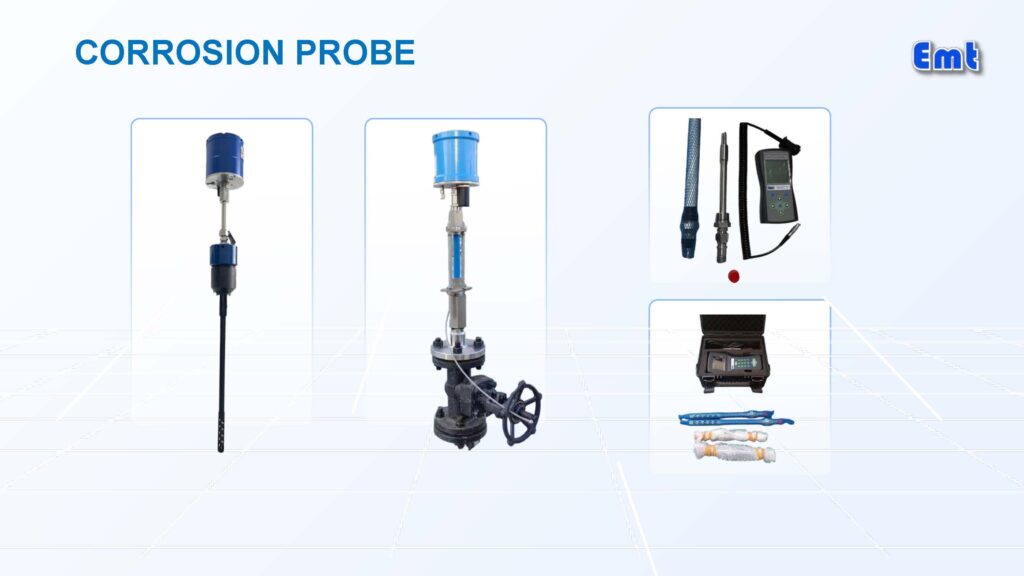
Two-electrode and three-electrode are the two configurations, and the difference is what the potential is measured against.
| Configuration | How it works | Use it when |
|---|---|---|
| Two-electrode | The same element serves as both working electrode and reference | Cost is the deciding factor and the process is relatively benign |
| Three-electrode | Separate working, reference and counter electrodes | Accuracy matters more than cost, or the electrolyte makes a shared reference unreliable |
EMT supplies both. The reference electrode is the reason three-electrode exists. If the reference electrode’s own potential drifts, the measurement drifts with it, and in a two-electrode arrangement that reference is also the element you are trying to measure. Splitting them removes that coupling.
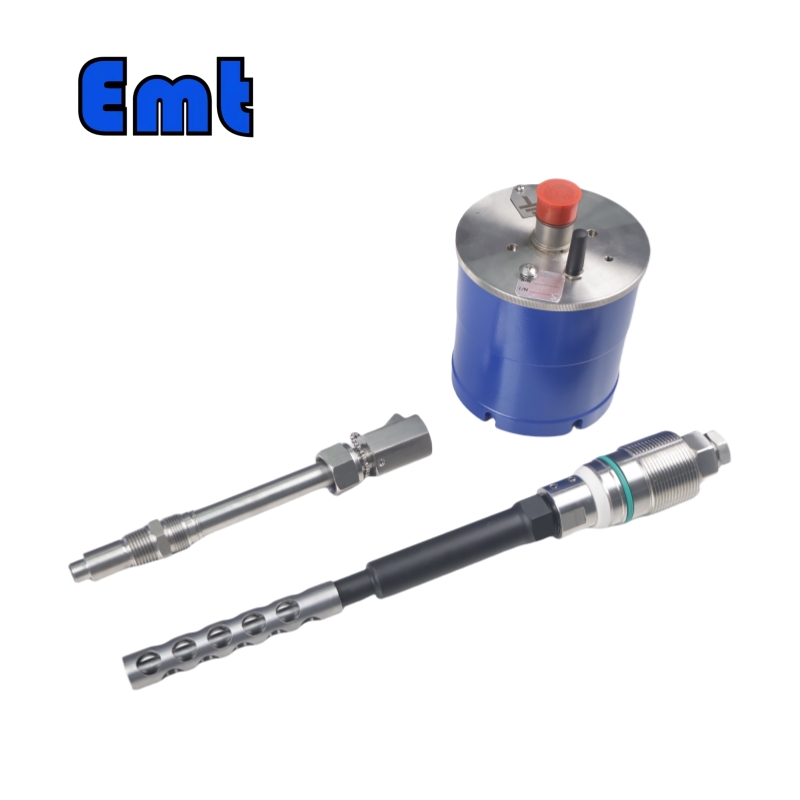
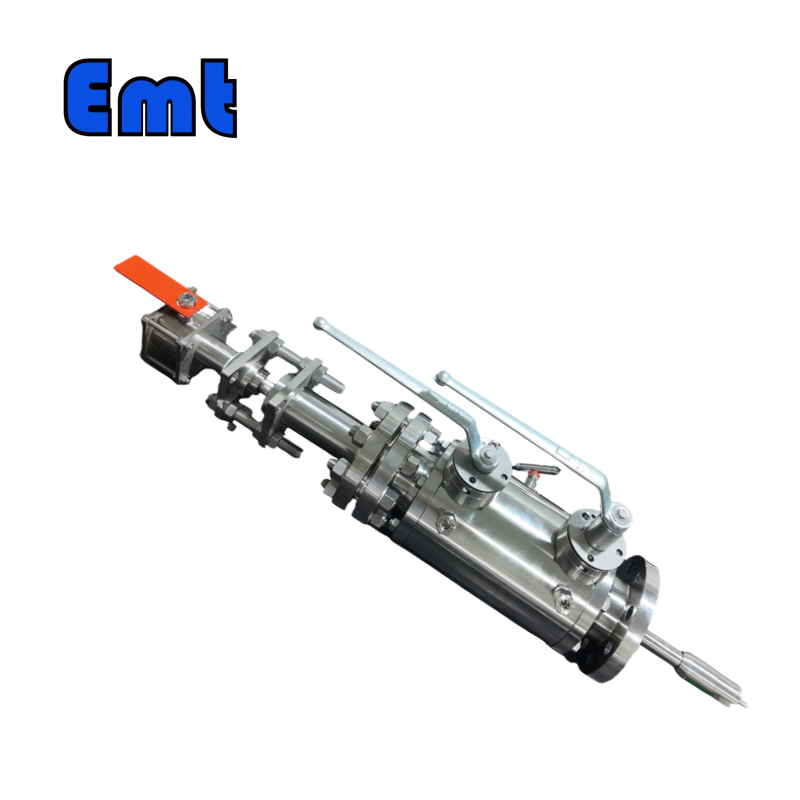
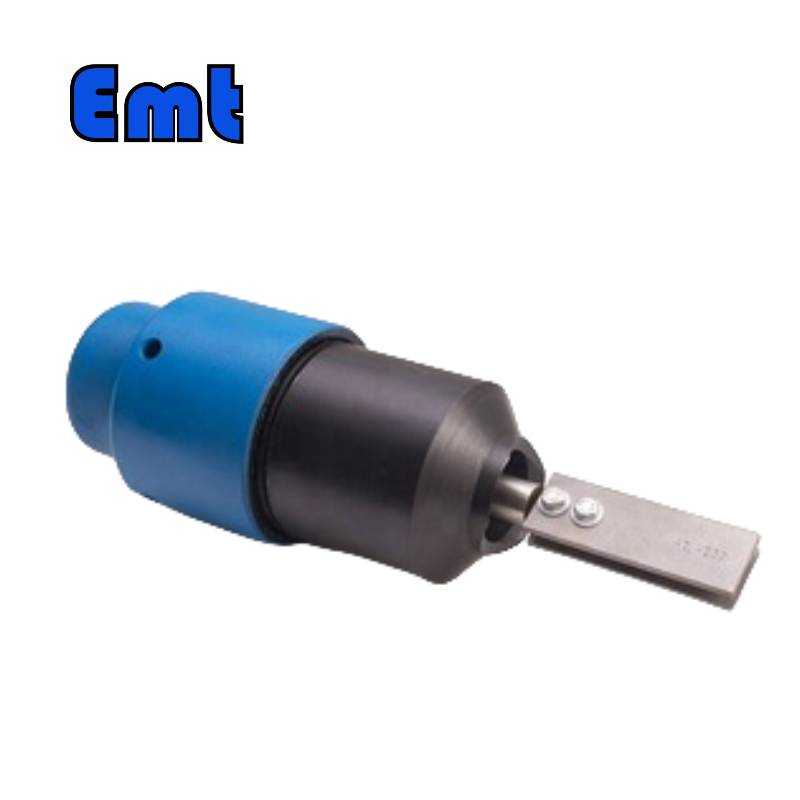
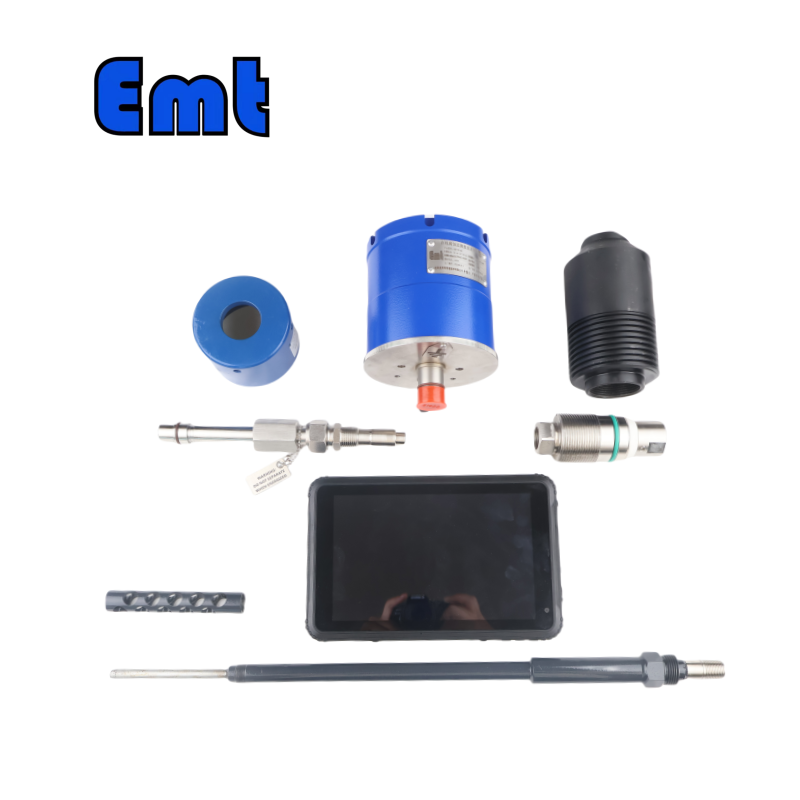
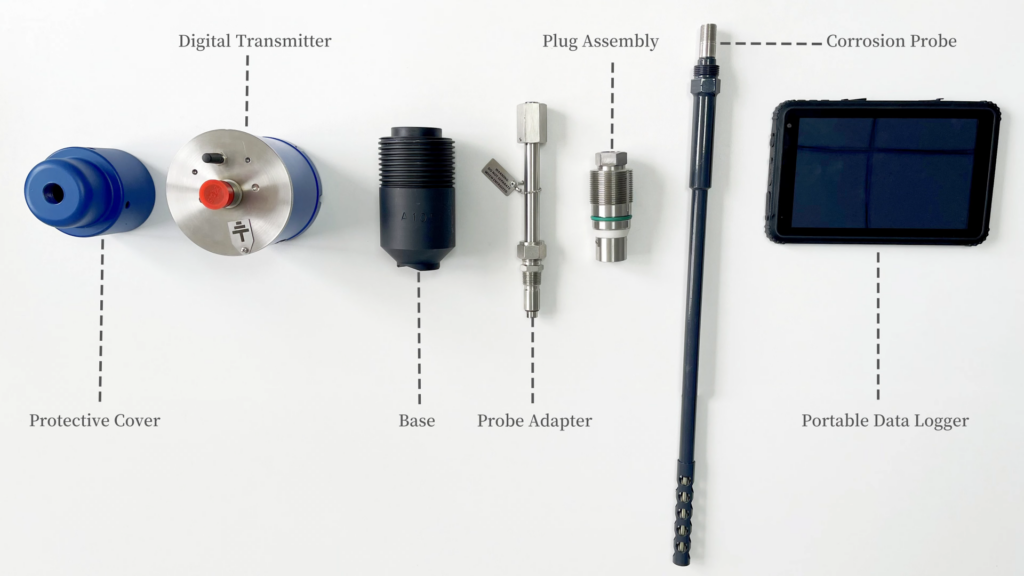
What Does The LPR Probe Hardware Look Like?
| Parameter | Specification |
|---|---|
| Measurement method | Linear polarization resistance (LPR) |
| Electrode material | 316L SS, Hastelloy C276 or Inconel, selected per project |
| Electrode count | 2-electrode or 3-electrode (working, reference, counter) |
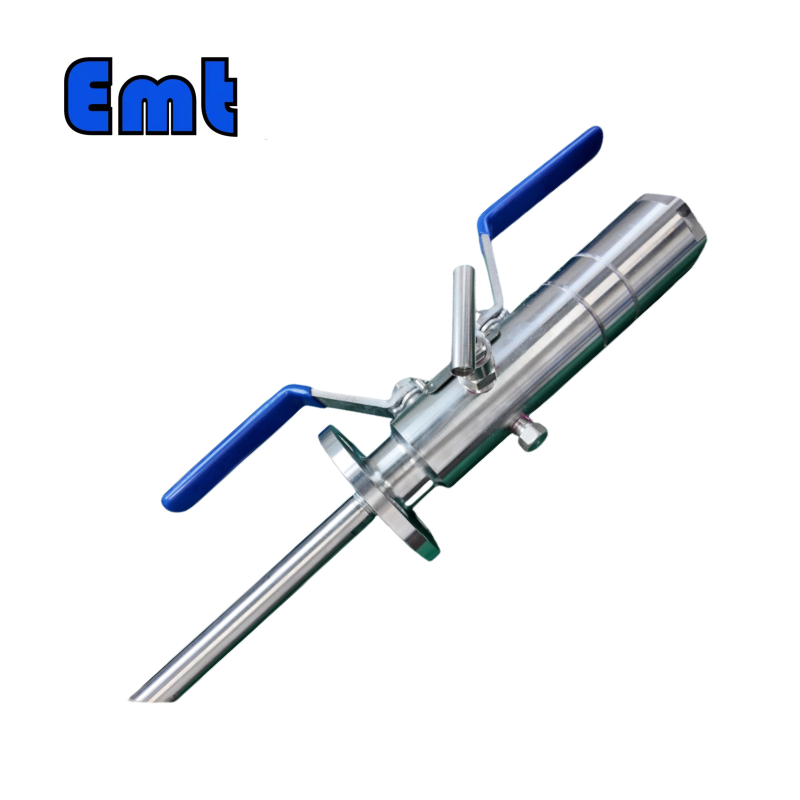
| Process connection | Standard access fitting 1 inch to 2 inch, retractable |
| Output signal | 4-20 mA, HART or Modbus RTU |
| Temperature range | -40 to 200 degrees C, probe dependent |
| Pressure rating | Up to ANSI 2500 LB, fitting dependent |
| Cable and housing | PTFE jacket, IP66 / NEMA 4X transmitter |
| Certification | ISO 9001, NACE SP0196 aligned, MTC on request |
Two things to note for procurement. The pressure rating belongs to the fitting, not to the probe, so the access fitting has to be specified with the line class in mind. And NACE SP0196 alignment matters the moment there is any H2S in the service, because sulphide attack on a reference electrode is a real failure mode rather than a theoretical one.
Where LPR Falls Short
Two limitations are worth stating up front, because both cause bad decisions when they are ignored.
Low conductivity fluids. LPR works by measuring current at an applied voltage. In a fluid that does not conduct well, that current is small and the measurement becomes noisy. Gas pipelines and dry hydrocarbon service are the common cases. If your line carries gas, an ER probe is usually the better answer.
Conductive scale and deposits. A conductive film on the element changes the current path and shifts the apparent rate. Iron sulphide is the usual offender. This is one of the reasons operators run a physical coupon alongside an electronic probe: the coupon is not fooled by scale, and it proves what the electronics reported.
There is also the temperature compensation question. A probe reading needs the process temperature applied to it, and an uncorrected reading at elevated temperature will be wrong by a margin that matters.
When To Choose LPR And When To Choose ER Instead
| Situation | Better choice | Why |
|---|---|---|
| Gas pipeline, low conductivity | ER probe | LPR current signal too weak in a non-conductive fluid |
| Liquid line, continuous operation | LPR | Real-time rate is worth more than absolute accuracy |
| Corrosive service with H2S | ER, or LPR with NACE SP0196 materials | Reference electrode sulphide attack |
| Line with conductive scale | ER plus a physical coupon | Scale corrupts the LPR current path |
| Need absolute metal loss, not a rate | ER | ER measures loss directly rather than inferring it |
| Acid cleaning or oxygen breakthrough | LPR | Conditions change faster than a retrieval cycle |
ER probes from EMT reach 45 MPa, which is 6,500 psi, and operate from -200 to 450 degrees C, with element materials in 316 SS, 316L, Duplex SS and Inconel, and element styles from flush to tubular to loop. They are retrievable through a hollow plug or access fitting and read out through RS485 or Modbus.
How Do You Keep The Data Useful?
The instrument is only half the system. Raw LPR data on its own is not much use, because the value is in the trend and in the comparison against physical coupons and against operating conditions.
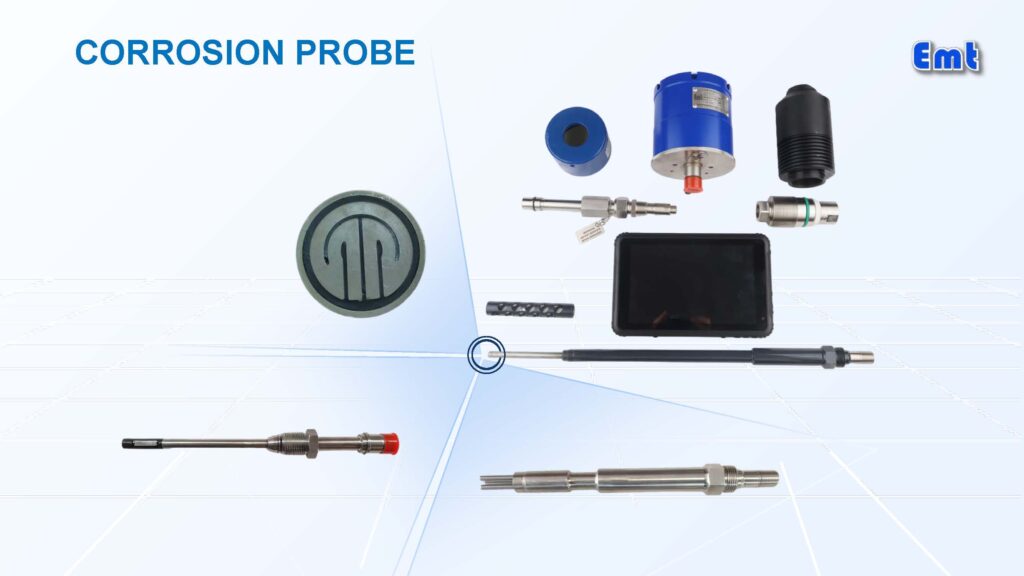
EMT supplies portable data transfer units for collecting probe data in the field, together with corrosion coupons that provide the physical check on the electronic reading. When an LPR probe reports a step change, the coupon retrieved at the end of the exposure period tells you whether it was real corrosion or an artefact of the fluid.
Typical Applications
LPR probes are specified in crude oil and product pipelines, refinery process lines, offshore platforms, chemical plants and water systems, wherever the corrosion rate has to be known while the line is running. They pair with chemical injection quills, since the point of measuring the rate is to confirm that the inhibitor programme is working. And they sit alongside the pigging programme, because removing the liquid accumulation is what stops the corrosion forming in the first place.
FAQ
What does linear polarization resistance measure?
It measures the corrosion rate of the metal element in the process, in mils per year, while the line is running. A small polarising current is applied and the resulting voltage is measured. The ratio between them gives the polarisation resistance, and the corrosion current divided by that resistance gives the rate.
Is LPR the same as electrical resistance?
No. ER measures metal loss directly, by watching the resistance of a thin element change as it thins. LPR infers the rate from the voltage response to an applied current. ER is the more direct measurement and holds up better in difficult fluids. LPR gives you an answer faster and is the practical choice in most liquid service.
What is the accuracy of an LPR probe?
It depends on the fluid and on the installation, which is why no single figure is quoted. Resolution of 0.1 to 0.5 microns of metal loss is typical for a good installation in a conductive liquid. In a low conductivity fluid, or with conductive scale on the element, the accuracy falls away and the reading becomes unreliable.
Can LPR probes be used in gas pipelines?
Generally not as the primary method. LPR needs the fluid to conduct enough current for the measurement to work, and gas service does not. ER probes are the standard choice for gas lines. If you need a rate in gas service, specify an ER probe or use a coupon with a retrieval tool.
What temperature range can an LPR probe handle?
Up to 200 degrees C, depending on the probe and the electrode material. For higher temperature service, ER probes from EMT cover -200 to 450 degrees C.
Why do you need three electrodes instead of two?
Because the reference electrode has its own potential, and that potential drifts. In a two-electrode arrangement the reference is the same element you are measuring, so the drift feeds straight into the reading. A separate reference electrode removes that coupling.
How often does an LPR probe need calibration?
It needs verification rather than frequent calibration. The working practice is to check the reading against a physical coupon retrieved at the end of the exposure period. If the two disagree, suspect the reference electrode, the temperature compensation, or conductive scale on the element, in that order.
What is the pressure rating?
Up to ANSI 2500 LB, and the rating belongs to the access fitting rather than the probe itself. The process connection is a standard 1 inch to 2 inch retractable fitting, so the fitting has to be specified to the line class.
Related EMT products
Related items in the same monitoring package include the standard corrosion probes in ER and LPR form, the corrosion monitoring access fitting the probe retracts through, the portable data transfer unit for collecting readings, and the corrosion coupons that check the electronics against physical metal loss.
Reviews
There are no reviews yet.